
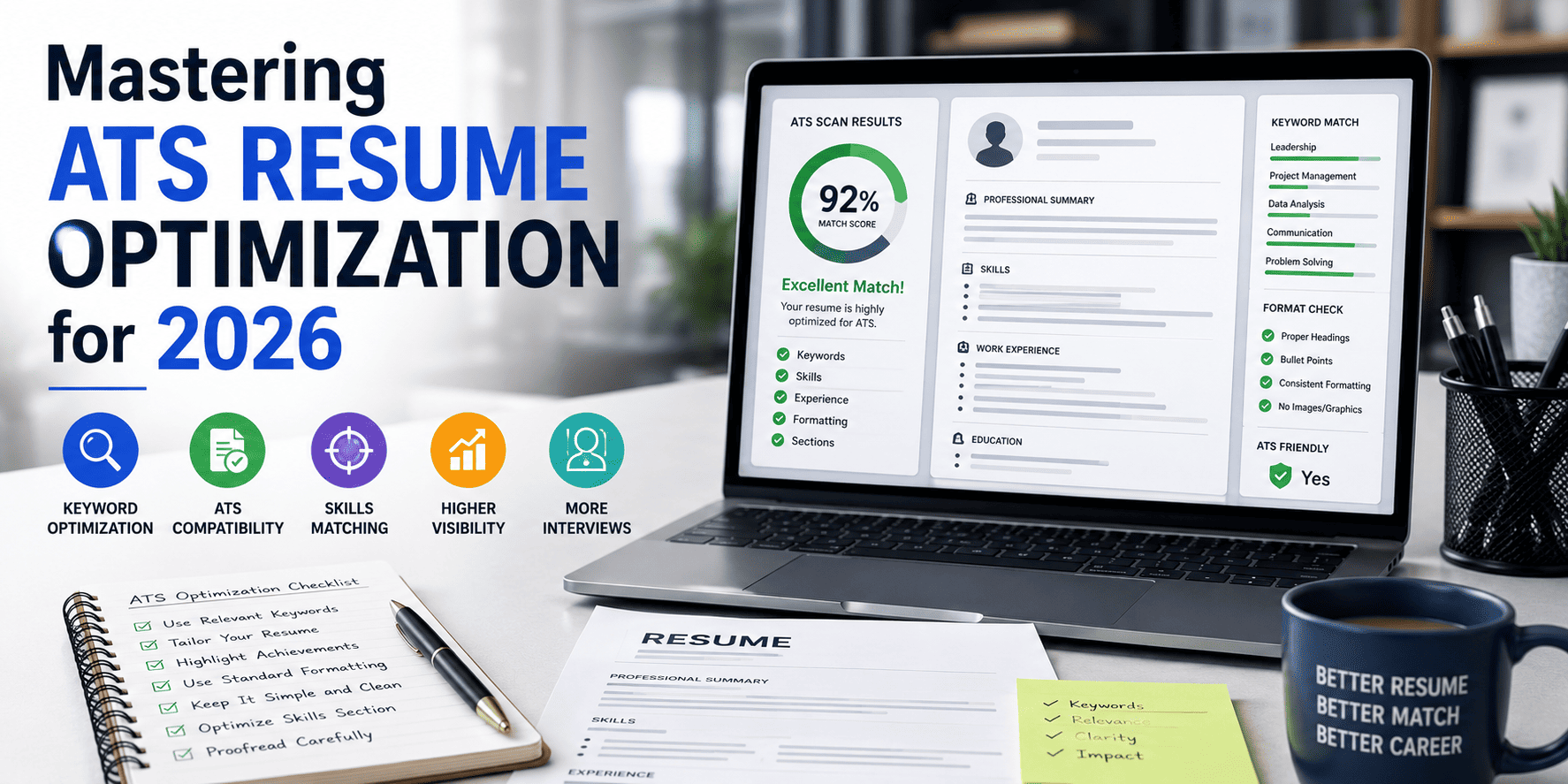
In the fiercely competitive job market of 2026, your resume's ability to pass through an Applicant Tracking System (ATS) can make or break your chances of landing an interview. With over 75% of resumes never reaching a human due to ATS filters, understanding the nuances of ATS optimization is crucial.
Understanding ATS: What, Why, and How
Applicant Tracking Systems are sophisticated software designed to streamline the recruitment process. They scan resumes for keywords, skills, and formatting to determine whether a candidate is a good fit for a job. Why is ATS important? Because a well-optimized resume ensures your skills and experiences aren't lost in translation when a machine, not a person, is your first hurdle.
- Keyword Relevance: ATS looks for specific terms relevant to the job description. Ensure your resume includes industry-specific jargon and role-specific keywords.
- Structured Formatting: Use clear, simple formatting. Fancy graphics and unusual fonts can confuse ATS algorithms, resulting in your resume being discarded.
How to Craft an ATS-Friendly Resume
- Use Standard Headers: Stick to standard section headers like 'Work Experience', 'Education', and 'Skills'.
- Include Keywords Naturally: Analyze the job description for keywords and incorporate them naturally into your resume.
- Avoid Headers and Footers: Place all critical information in the main body of the document.
- Choose Readable Fonts: Stick to classic fonts like Arial or Times New Roman.
- Use Bullets for Lists: Bullet points enhance readability and are easily parsed by ATS.
Example: Weak vs. Strong Resume
Weak Resume Segment:
"Experienced professional with a history of working in various industries."
Strong Resume Segment:
"Dynamic Project Manager with 5+ years in the finance sector, skilled in Agile methodologies and team leadership."
Common Mistakes to Avoid in 2026
- Overloading with Keywords: Keyword stuffing can lead to disqualification. Balance is key.
- Ignoring Job Descriptions: Tailor each resume to the specific job. Generic resumes perform poorly.
- Complex Formatting: Avoid tables, graphics, and columns that ATS may misinterpret.
Best Practices for 2026
- Craft a Custom Resume for Each Job: Customize your resume to highlight the most relevant experience for each position.
- Utilize Jobportalix's Resume Builder: Leverage tools like Jobportalix to create an ATS-friendly resume effortlessly.
- Keep It Concise: Aim for a one-page resume unless you have extensive experience that merits more space.
| Checklist for ATS-Optimized Resume |
|---|
| Use standard fonts and sizes |
| Include relevant keywords |
| Keep formatting clean and simple |
| Tailor content to each job |
| Avoid images and graphics |
Real-World Example
Consider Jane, a marketing specialist. By utilizing Jobportalix's resume builder and following these ATS tips, her resume not only passed through ATS filters but also increased her interview callbacks by 50%. She incorporated specific terms like "SEO strategy" and "content marketing" directly from the job listings she was targeting.
Frequently Asked Questions
How do I find keywords for my resume? Analyze job descriptions for recurring skills and terms. Jobportalix offers keyword suggestions based on industry standards.
Can I use PDF format for ATS systems? While many ATS systems can read PDFs, it's safer to submit your resume in Word format unless otherwise specified.
Do ATS systems consider cover letters? Typically, ATS focuses on resumes, but a well-crafted cover letter can complement your application when reviewed by a human recruiter.
What sections should my resume include? Ensure it has Contact Information, Work Experience, Education, and Skills. Additional sections can be added if relevant.
Final Thoughts
Mastering ATS optimization is not just about passing a system's check—it's about ensuring your resume accurately reflects your potential. By applying these strategies, you enhance your visibility to employers in 2026. Start optimizing today and take a proactive step towards your dream career with Jobportalix's tools.