In today's competitive job market, certifications can be the distinguishing factor that sets you apart from other candidates. With over 70% of job seekers including at least one certification on their resumes, knowing how to present them effectively is crucial for standing out.
Why Certifications Matter More Than Ever
Certifications validate your skills and commitment to professional growth. According to a 2025 survey by CareerBuilder, candidates with relevant certifications are 40% more likely to receive interview callbacks. This is especially true in fields like IT, healthcare, and finance where specific credentials are often prerequisites for advancement.
Where to Place Certifications on Your Resume
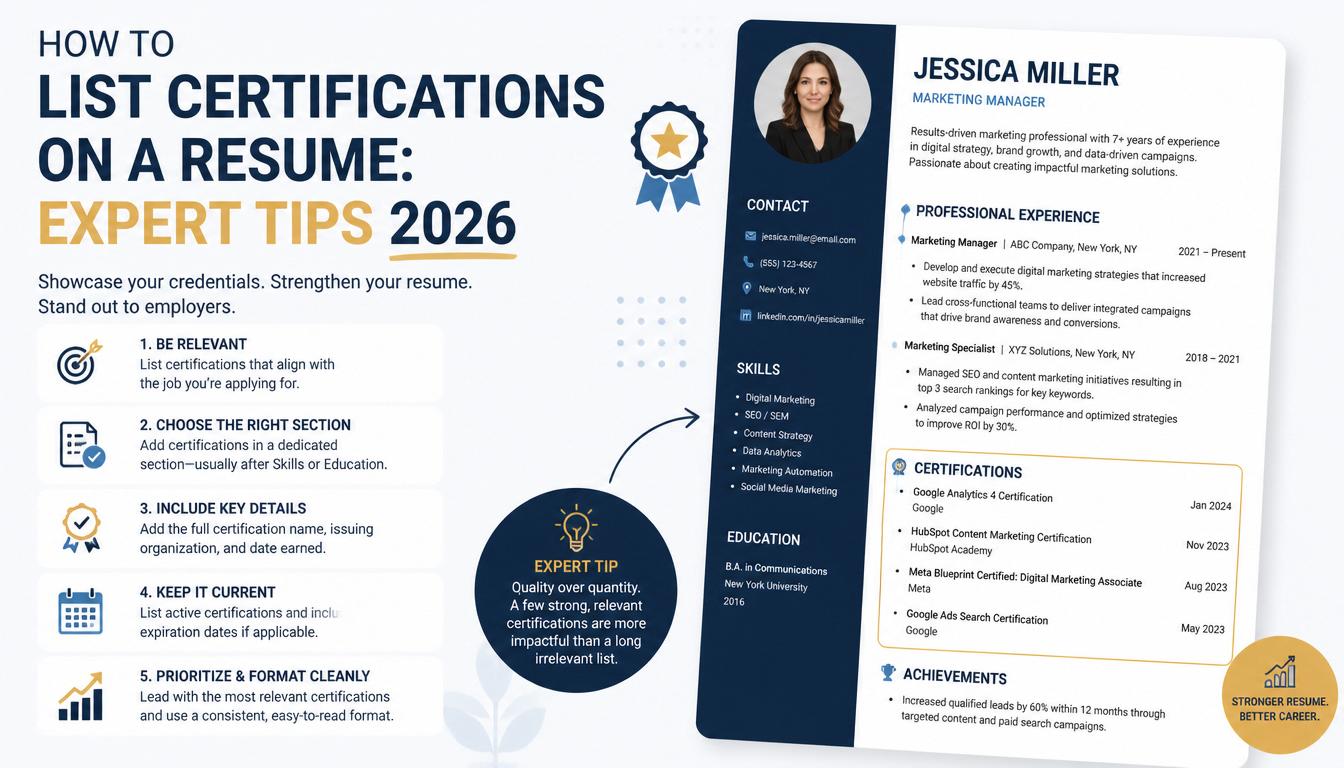
The placement of certifications can significantly influence how they are perceived:
- Dedicated Certifications Section: Ideal for fields requiring continuous education, such as healthcare or IT.
- Education Section: Suitable for recent graduates or when the certification complements your academic background.
- Professional Summary: Highlight key certifications here if they are critical to the job you're applying for.
Examples:
- Before: Listed under a generic 'Additional Information' section.
- After: Moved to a prominent 'Certifications' section below professional summary.
How to Format Certifications Correctly
Proper formatting ensures clarity and professionalism:
- Certification Name: Use the full name, avoid abbreviations unless widely recognized (e.g., PMP, CPA).
- Issuing Organization: Always include the certifying body.
- Date Obtained: Month and year, e.g., Certified Scrum Master, Scrum Alliance, May 2023.
- Expiration Date: Include if applicable, especially for certifications requiring renewal.
| Certification             | Issuing Organization | Date Obtained | Expiration |
|---------------------------|----------------------|---------------|------------|
| Certified Data Analyst    | Data Analytics Assoc.| June 2025     | June 2028  |
| AWS Certified Developer   | Amazon               | December 2024 | N/A        |
Common Mistakes to Avoid
Avoid these pitfalls to ensure your certifications enhance rather than detract from your resume:
- Vague Titles: Avoid using acronyms or titles not widely recognized. Be specific.
- Outdated Certifications: Keep your list current. Remove expired or irrelevant certifications.
- Overloading: Only list certifications that are relevant to the job you're applying for to maintain focus.
Best Practices for Showcasing Certifications
Follow these best practices to ensure your certifications add maximum value:
- Relevance: Tailor the certifications listed to the job description and industry.
- Highlight Unique Certifications: Stand out by showcasing less common certifications relevant to the role.
- Leverage Jobportalix Tools: Use Jobportalix’s resume builder to easily incorporate certifications and ensure ATS compatibility.
Real-World Example: Transforming Your Resume
Consider Sarah, an IT professional, applying for a cybersecurity position. Initially, her certifications were buried in her resume. By creating a dedicated section at the top, she highlighted her CISSP and CompTIA Security+ certifications, leading to a 50% increase in interview requests.
Frequently Asked Questions
How many certifications should I list on my resume?
Focus on quality over quantity. List 3-5 relevant certifications to keep your resume concise and impactful.
Should I list expired certifications?
Generally, no. However, if the skills are still relevant and the knowledge is current, it might be worth mentioning under a different context.
Can I add certifications I'm currently pursuing?
Yes, indicate they're in progress with an expected completion date. This shows initiative and growth.
What if my certification has a long name?
Use the full name on first mention, then abbreviate if necessary. Ensure clarity and understanding.
Final Thoughts
Certifications can serve as a powerful testament to your skills and dedication. By strategically placing and formatting them on your resume, you increase your chances of capturing a recruiter’s attention. Start today by organizing your credentials with Jobportalix’s resume builder, setting your career on a path to success.