
Balancing personal life with a demanding career is increasingly important in 2026, as more professionals seek flexible working hours. Recent studies show that 82% of workers now prioritize flexibility over salary. But how do you negotiate such a crucial aspect of your work life without jeopardizing your position?
Understanding the Benefits of Flexible Hours
Flexible working hours can lead to increased productivity, better mental health, and improved job satisfaction. Companies that offer flexibility report higher employee retention and engagement levels. For example, a 2025 survey by Jobportalix revealed that firms with flexible work policies experienced a 30% reduction in employee turnover.
The Impact on Productivity
Employees with flexible schedules often report higher productivity levels. By allowing workers to tailor their work hours to when they are most productive, companies can benefit from enhanced output and creativity.
Enhancing Work-Life Balance
Flexible hours enable employees to manage personal responsibilities more effectively, reducing stress and burnout. This balance is key to maintaining long-term career satisfaction.
How to Prepare for the Conversation
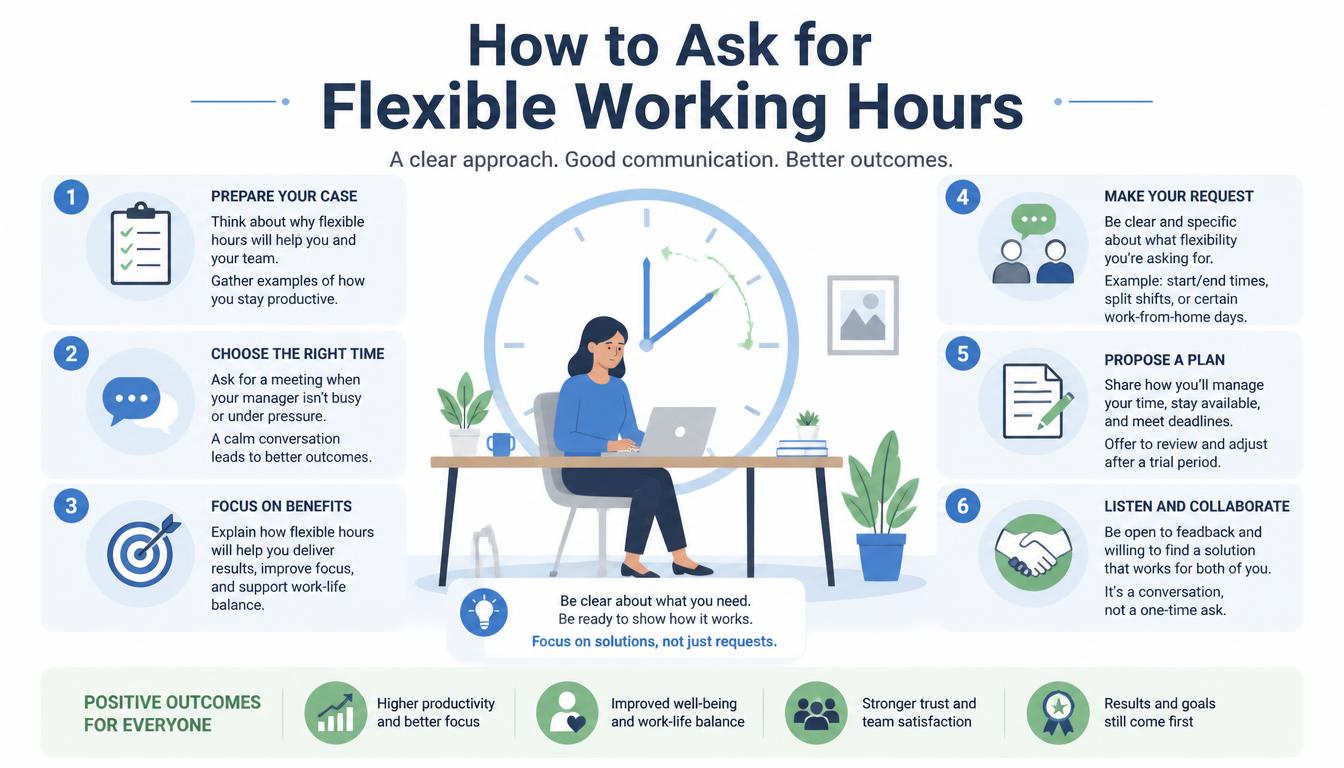
Preparation is crucial when asking for flexible working hours. Here's a step-by-step guide to help you make a compelling case:
- Research Company Policy: Understand your company's stance on flexible hours. Review any relevant documentation or speak to HR for clarity.
- Assess Your Role: Consider how your role can accommodate flexibility without compromising performance. Identify core responsibilities and how they can be adapted.
- Gather Evidence: Collect data or examples that demonstrate your productivity and reliability. This could include performance reviews or successful project completions.
- Propose a Plan: Develop a clear plan outlining how you will manage your responsibilities with flexible hours. Include potential schedules and communication strategies.
- Schedule a Meeting: Request a formal meeting with your supervisor to discuss your proposal. Ensure you choose a time that allows for an uninterrupted conversation.
Common Mistakes to Avoid
When negotiating for flexible hours, avoid these pitfalls:
- Lack of Preparation: Failing to prepare can lead to vague proposals and a lack of confidence.
- Ignoring Company Needs: Ensure your request aligns with company goals. Highlight how flexibility can benefit both parties.
- Being Inflexible: Be open to compromise and alternative solutions if your initial proposal is not feasible.
Best Practices for Successful Negotiation
To ensure a successful negotiation, follow these best practices:
- Communicate Clearly: Articulate your reasons for seeking flexibility and how it benefits your work.
- Showcase Reliability: Highlight past performance that demonstrates your ability to manage flexible hours effectively.
- Be Professional: Maintain a professional tone and be prepared to discuss potential challenges and solutions.
Real-World Example: Before and After
Consider the case of Emily, a marketing manager who initially struggled to balance work and family commitments:
| Aspect | Before Flexible Hours | After Flexible Hours |
|---|---|---|
| Productivity | Frequently missed deadlines | Consistently met or exceeded deadlines |
| Work-Life Balance | High stress, frequent burnout | Better balance, increased satisfaction |
| Engagement | Lower engagement in team projects | Active participation and leadership |
Emily's transition to flexible hours not only improved her professional performance but also enhanced her personal well-being.
Frequently Asked Questions
What if my employer doesn't have a flexible hours policy? Start by presenting a well-researched proposal. Highlight industry trends and potential benefits to make a compelling case.
How can I demonstrate productivity with flexible hours? Use performance metrics and past achievements to show your ability to maintain or increase productivity with a flexible schedule.
What if my request is denied? Seek feedback to understand the reasons. Be open to alternative arrangements or revisiting the conversation in the future.
Can flexible hours affect career advancement? Properly managed, flexible hours should not hinder advancement. Focus on maintaining high performance and clear communication.
Final Thoughts
Flexible working hours are no longer a perk but a necessity for many professionals in 2026. By understanding the benefits, preparing thoroughly, and negotiating effectively, you can achieve a work schedule that supports both your career and personal life. Ready to make the change? Start by reviewing your current job role and how flexibility could enhance both your productivity and satisfaction.